
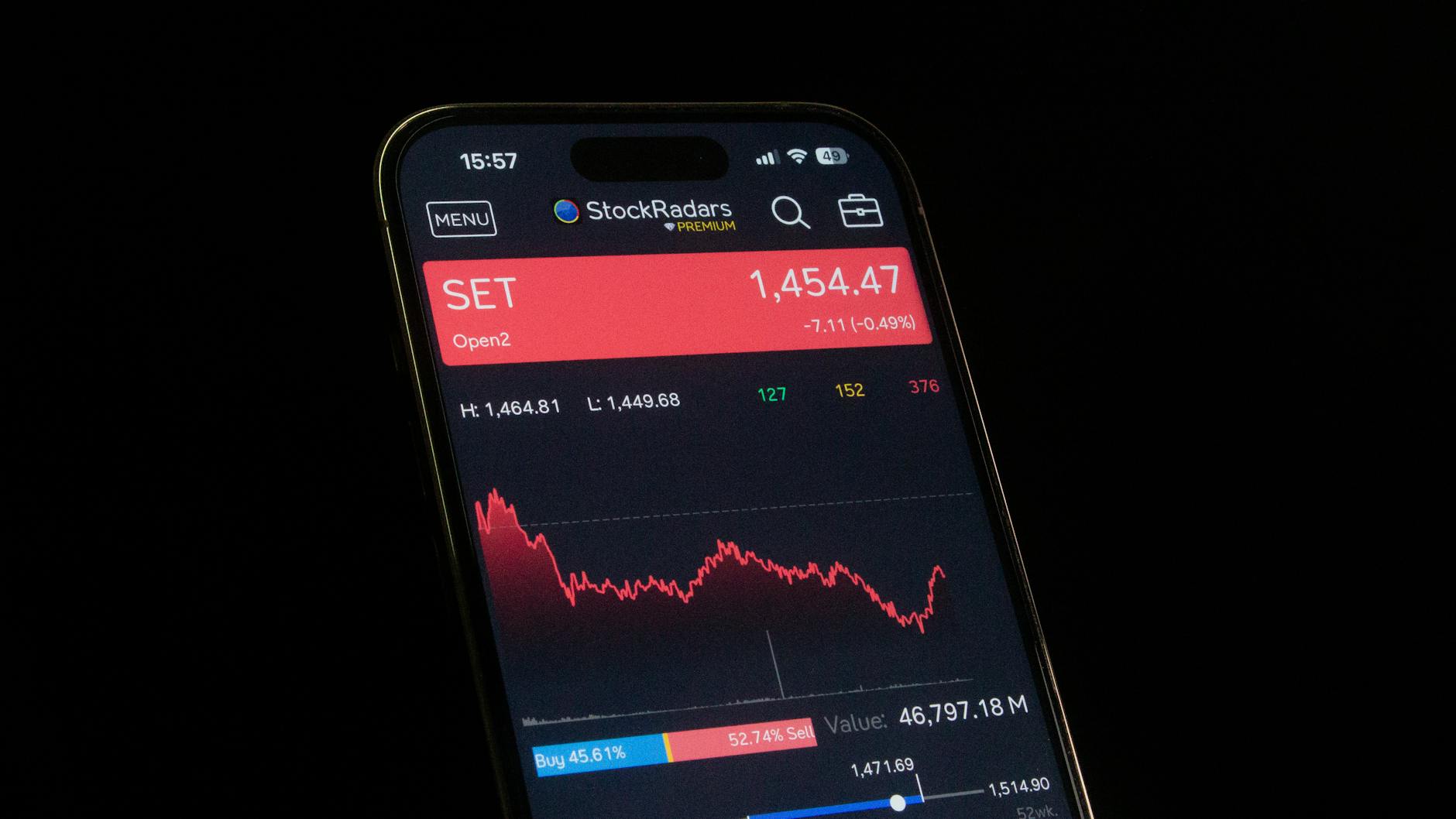
Your portfolio just dropped 8% in two weeks. Your stomach churns every time you check your investment app. Sound familiar?
Welcome to investing during market volatility-where fortunes are made by those who keep their heads while everyone else is losing theirs. The good news? You can master this with the right volatile market strategy.
Understanding Your Risk Tolerance (Not Risk Capacity)
Here’s what most financial advice gets wrong: they tell you what you can afford to lose (risk capacity) instead of what keeps you sleeping at night (risk tolerance).
Risk capacity is mathematical. If you’re 30 years old with 35 years until retirement, you can theoretically handle a 90% stock portfolio. But if a 20% drop makes you sell everything at 3 AM, your actual risk tolerance is much lower.
Try this exercise: imagine your $50,000 portfolio dropping to $35,000 tomorrow. Would you buy more, hold steady, or sell? Be honest-millennial investing anxiety is real, and there’s no shame in acknowledging it.
A 2026 Vanguard study found that investors who matched their portfolio to their true risk tolerance (not capacity) were 3.2 times less likely to panic sell during downturns. That difference alone can mean hundreds of thousands in retirement savings.
Dollar-Cost Averaging During Downturns
Dollar-cost averaging (DCA) is your secret weapon when markets get choppy. Instead of timing the market, you invest fixed amounts at regular intervals-regardless of price.
Here’s the math: Say you invest $500 monthly into an S&P 500 index fund. In January 2026, shares cost $450 each (you buy 1.11 shares). By March, after a correction, they’re $360 (you buy 1.39 shares). When prices recover to $450, you’ve already accumulated more shares than if you’d invested a lump sum at the peak.
The beauty? DCA turns volatility into your advantage. Lower prices mean you’re buying stocks ‘on sale.’ This volatile market strategy removed the emotional burden of deciding when to invest.
Real example: An investor who DCA’d through the 2022-2023 bear market accumulated 23% more shares than someone who waited for the ‘perfect entry point’ that never came.
Portfolio Protection Strategies That Actually Work
Let’s bust a myth: you don’t need complicated options strategies or hedge fund tactics to protect your portfolio. Simple diversification still wins.
The 2026 edition of bear market investing tips starts with asset allocation. A mix of 60% stocks and 40% bonds typically sees half the volatility of 100% stocks, while still capturing 85-90% of long-term returns.
Consider adding these protection layers: Treasury Inflation-Protected Securities (TIPS) currently yield 2.3% above inflation in 2026. International stocks provide geographic diversification-when U.S. markets stumble, emerging markets often hold steady.
REITs and dividend-paying stocks offer income even when prices drop. A portfolio earning 3% in dividends doesn’t feel quite as bad when it’s down 10% in value.
One strategy gaining traction: the ‘core and explore’ approach. Keep 80% in low-cost index funds (your stable core), and use 20% for tactical positions or individual stocks (your exploration zone). If your explore portion crashes, you’ve only risked a fifth of your portfolio.
When to Rebalance vs. When to Hold Steady
Rebalancing is selling winners and buying losers-which feels completely wrong during market volatility. But it’s one of the most powerful wealth-building tools available.
The rule: rebalance when your allocation drifts 5% or more from your target, or once annually-whichever comes first. If your 60/40 stock-bond mix becomes 70/30 after a rally, sell some stocks and buy bonds.
Why it works: you’re automatically buying low and selling high. Research from Morningstar shows disciplined rebalancing adds 0.4% to 0.8% annually to returns-that’s an extra $80,000 on a $500,000 portfolio over 20 years.
When to hold steady instead? If you’ve rebalanced within the past three months, resist the urge to tinker. Excessive trading triggers taxes and fees that erode returns. During extreme volatility (like March 2020 or October 2022), sometimes the best action is no action.
Historical Returns After Major Market Drops
History offers comfort when markets tank. Here’s what actually happened after major drops:
After the 2022 bear market (down 25%), the S&P 500 returned 28% in 2023 and 24% in 2024. Investors who sold in panic missed the entire recovery. Those practicing patient investing during market volatility saw their portfolios reach new highs by early 2025.
Following the 2020 COVID crash (down 34% in 33 days), markets recovered fully within five months. One year later, investors who stayed invested were up 18% from pre-crash levels.
The pattern repeats throughout history. After the 2008-2009 financial crisis, the subsequent bull market lasted 11 years and returned over 400%. The dot-com crash losers who held on saw full recovery plus gains by 2013.
Average recovery time for 10% corrections in 2026? Just four months. For 20% bear markets? Fourteen months. Your patience has a specific timeframe and a proven track record.
Managing Investment Anxiety Without Selling
Let’s talk about the elephant in the room: millennial investing anxiety is spiking in 2026, with market swings triggering genuine stress responses.
First strategy: stop checking your portfolio daily. A Schwab study found investors who checked accounts weekly made better decisions than daily checkers, who were 2.4 times more likely to panic sell. Set a schedule-maybe monthly-and stick to it.
Second: automate everything possible. Automatic investments and rebalancing remove emotional decisions. You can’t panic sell if you’re not actively managing.
Create a ‘what-if’ plan before volatility hits. Write down: ‘If my portfolio drops 20%, I will [invest extra $500 monthly/hold steady/rebalance]. If it drops 40%, I will [same options].’ Having a predetermined response eliminates deer-in-headlights paralysis.
Consider a cash buffer too. Keeping 3-6 months of expenses in high-yield savings (currently 4.5% in 2026) means you won’t need to sell investments during a downturn to cover emergencies. This single move reduces anxiety dramatically.
Finally, remember why you’re investing. You’re not trying to get rich by next Tuesday-you’re building wealth over decades. Market volatility is the price of admission for long-term returns, not a sign you’re doing something wrong.
Ready to transform volatility from enemy to opportunity? Start by honestly assessing your risk tolerance today. Then set up automatic investments at your comfort level. Your future self-watching your portfolio hit seven figures-will thank you for staying the course when everyone else was running for the exits.